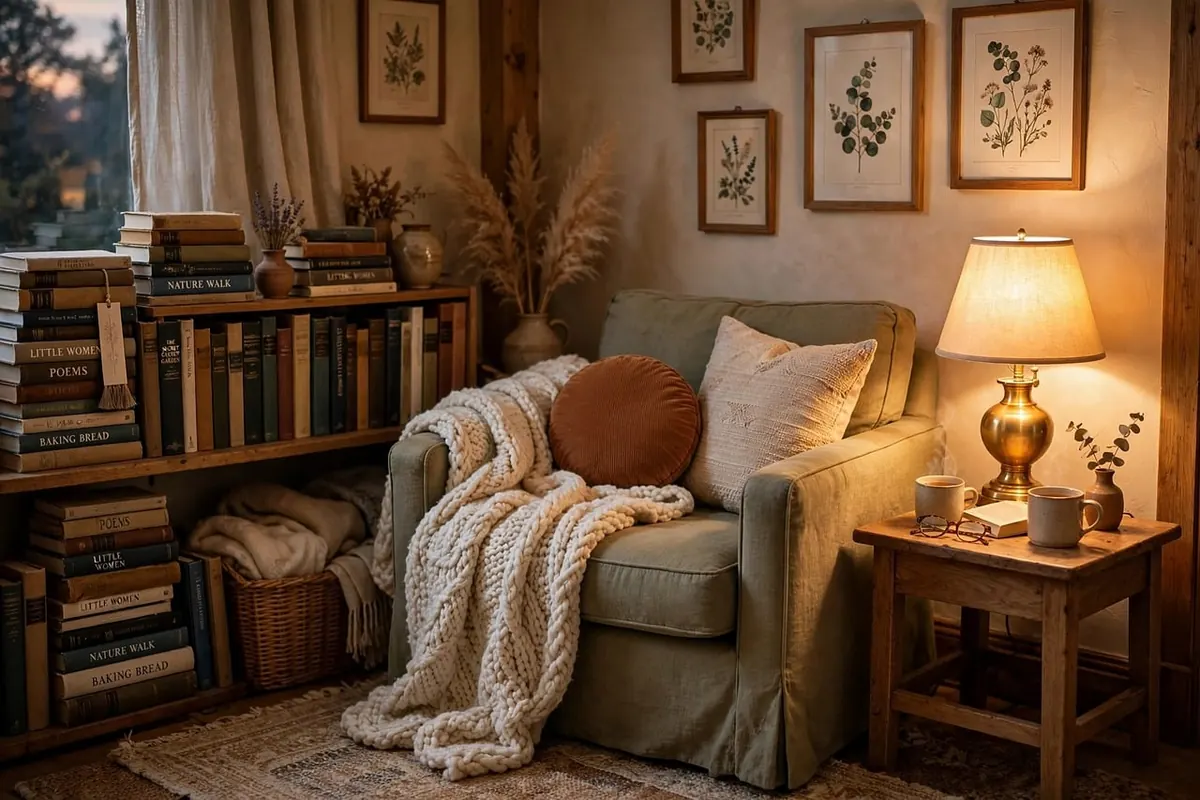
Winter reading is a different discipline from summer reading. The light goes early, the house settles, and a novel has to do more than pass the time. It needs weather of its own: a fire, a fog, a frozen lane, a room with too many locked doors. The ten books below are all British novels that reward a long evening, a blanket and a mug of something hot. They are not ranked; pick according to mood, not page count.
Frost and Firelight: Gothic Comforts
Start with the books that make a virtue of draughts and candlelight. Charlotte Brontë’s Jane Eyre is the obvious companion: Lowood’s frozen mornings, Thornfield’s corridors, the voice that keeps you reading past midnight. The mood is romantic and stern; the pacing is a slow build with sudden shocks.
Susan Hill’s The Woman in Black is the opposite in length and temperature. A young solicitor is sent to sort papers at Eel Marsh House, reached by a causeway that vanishes under the tide. The setting is marsh, mist and isolation; the pacing is brisk and unrelenting. It is short enough for one long evening, but leave a lamp on.
Moors, Marshes and Hard Weather
Emily Brontë’s Wuthering Heights is winter reading in its bones. The Yorkshire moors are not a backdrop but an argument: wind, snow, gravestones, and a love story that behaves like a haunting. The pacing is intense but framed by a narrator’s slow recovery, which gives the wildness a strange, chilly calm.
Daphne du Maurier’s Rebecca trades moors for the Cornish coast and a great house called Manderley. The mood is dreamlike and menacing; the pacing is a slow reveal that tightens with every chapter. It is ideal for a reader who likes atmosphere, secrets and a narrator who knows less than everyone around her.
For a different kind of damp English chill, Sarah Perry’s The Essex Serpent moves through marshes, muddy streets and a village gripped by rumour. The mood is Victorian, curious and slightly feverish; the pacing is unhurried but full of intellectual argument and quiet desire. It is a good choice if you want landscape and ideas in equal measure.
Slow Burners for Long Nights
Not every winter evening wants ghosts. Some want restraint. Kazuo Ishiguro’s The Remains of the Day is a quiet novel about a butler motoring through the West Country while the country changes behind him. The mood is melancholy, controlled and deeply moving; the pacing is reflective, almost hushed. It rewards patience, and its final pages land harder for the stillness that precedes them.
J.L. Carr’s A Month in the Country is even shorter and gentler. A damaged young veteran goes to a Yorkshire village to uncover a medieval wall painting, and finds sunlight, friendship and a summer that will not return. The mood is elegiac; the pacing is slow and precise. Read it in one sitting on a snowy afternoon, then sit with it.
Historical Immersion for Dark January
Hilary Mantel’s Wolf Hall is the book to choose when the nights are long and your attention is fresh. Thomas Cromwell moves through Tudor courts, kitchens and memories; the setting is detailed enough to smell. The mood is watchful and political; the pacing is dense, with dialogue that often requires you to keep your wits about you.
A.S. Byatt’s Possession is a literary mystery split between Victorian poets and modern scholars. The mood is wintry in the best sense: archives, letters, trains, cold English seasides. The pacing is layered and deliberate, with poems and pastiche that ask something of the reader. If you like puzzles and want a novel that feels like a season’s project, this is it.
Midwinter Magic and Post-War Unease
Susan Cooper’s The Dark Is Rising is often shelved as children’s fiction, which is a mistake. It begins at midwinter, when Will Stanton discovers he is one of the Old Ones and the Dark is rising. The setting is the Thames Valley under snow; the mood is mythic and urgent; the pacing is brisk and episodic. It is perfect for the solstice, whether you are fifteen or fifty.
Sarah Waters’s The Little Stranger takes place in a decaying Warwickshire house after the Second World War. A country doctor becomes entangled with the Ayres family and their failing estate. The mood is uneasy and repressed; the pacing is slow, building dread through small details rather than shocks. It is a novel about class, change and the things people refuse to say.
How to Build Your Winter Reading Stack
Ten books is a shelf, not a fortnight. The trick is to match the book to the evening rather than forcing a schedule. A few practical rules help.
- Keep one short book by the kettle. Ghost stories and novellas — The Woman in Black, A Month in the Country — are ideal for the nights when concentration is thin.
- Save the dense ones for fresh evenings. Wolf Hall and Possession ask for a clear head. Start them on a weekend, not after a long day.
- Pair the setting with the weather. If it is blowing a gale, reach for the Brontës or du Maurier. If it is cold but still, try Ishiguro or Carr.
- Read with a pencil. Winter reading is slower reading. Mark a sentence you like; it gives the evening a shape.
- Let one book be comfort and one be challenge. Rotate between them. That way you are never stuck in a mood you did not choose.
Finally, do not treat the list as a test. A winter reading list is a way of paying attention to the season: dark afternoons, early lamps, the sound of rain or snow against the glass. If a novel does not fit the weather in your head, put it aside and try another. The right book will make the evening longer in the best way.